
Infusions · Systemic Skin Nourishment
The Skin Rejuvenation Infusion: systemic skin nourishment
A precision IV formulation targeting antioxidant defence, collagen synthesis, cellular repair, and structural hydration simultaneously, at concentrations topical products and oral supplements cannot replicate.
Why topical products have fundamental limits
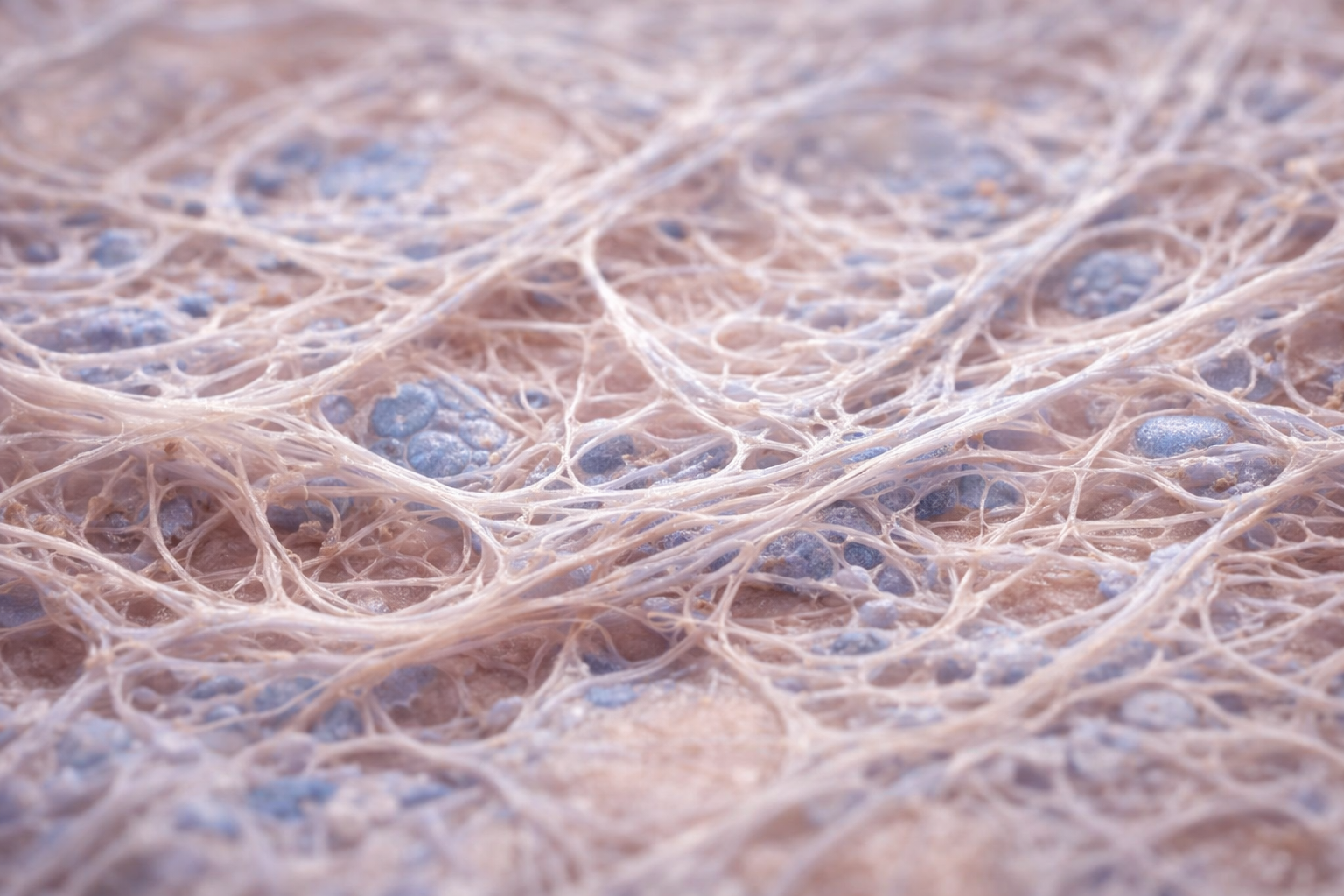
The skin’s outer layers, the stratum corneum and epidermis, function as a biological barrier. For most active ingredients applied topically, this barrier significantly limits penetration into the dermis, where collagen, elastin, and fibroblasts are located. Molecular size, lipid solubility, charge, and formulation all affect how much of a topical product reaches the tissue where it could have a structural effect.
Retinoids (small, lipophilic molecules) achieve reasonable dermal penetration. Most other actives, including vitamin C, glutathione, and amino acids, do not. Oral supplementation bypasses the skin barrier but introduces digestive absorption limitations. Glutathione is almost entirely degraded by gut enzymes before absorption. IV delivery circumvents both barriers entirely, achieving near-complete systemic bioavailability.
Key active ingredients and their roles
| L-Glutathione (600mg) Master antioxidant; neutralises free radicals; skin brightening via melanin pathway modulation; liver detoxification support | Vitamin C (300mg) Essential cofactor in collagen synthesis (hydroxylation of proline and lysine); direct UV damage protection |
| L-Lysine (1000mg) Structural amino acid directly incorporated into collagen and elastin fibres | Taurine (1500mg) Membrane stabilisation, cellular hydration regulation, antioxidant and anti-inflammatory activity |
| L-Carnosine (200mg) Anti-glycation agent, inhibits advanced glycation end-products (AGEs) that cross-link and stiffen collagen fibres | N-Acetyl-L-Cysteine (300mg) Precursor to glutathione; independent antioxidant and anti-inflammatory; cellular detoxification support |
| L-Carnitine (1000mg) Transports fatty acids into mitochondria for energy production; supports cellular metabolism and repair | B-vitamin complex (B2, B3, B5, B6, B7, B12, Folate) Cofactors in skin cell metabolism, repair, and renewal; barrier function; energy metabolism |
| Zinc & Selenium Cofactors for antioxidant enzymes (superoxide dismutase, glutathione peroxidase); immune defence; wound healing | Magnesium & Calcium Intracellular signalling, enzyme activation, structural cellular function |
Bioavailability: why IV delivery changes the equation
When many of these ingredients are taken orally, their effective bioavailability ranges from as low as 10% (glutathione) to 30 to 50% for better-absorbed compounds. Intravenous delivery achieves near-100% systemic bioavailability for all components simultaneously, a difference of magnitude, not degree.
On glycation and the Carnosine rationale
Glycation, the non-enzymatic cross-linking of collagen and elastin by glucose, stiffens collagen fibres, making them less functional and more prone to visible ageing. L-Carnosine is one of the few compounds with clinical evidence as a direct glycation inhibitor. Its inclusion addresses a pathway that no topical product can meaningfully reach.
How this differs from the NAD+ infusion
The NAD+ infusion targets cellular energy metabolism and DNA repair, the foundational machinery of cellular function. The Skin Rejuvenation Infusion targets the structural and biochemical environment in which skin cells operate: antioxidant defence, collagen substrate availability, glycation protection, and cellular nourishment.
The two are complementary rather than redundant. NAD+ supports the cellular machinery; the Skin Rejuvenation Infusion supplies the molecular building blocks and defensive capacity. Combined, they address skin health from different and synergistic angles.
Ready to put this into practice?
Consultations at HALO are free and never obligatory. Bring your questions.
Book Now