
Infusions · Cellular Energy & Longevity
NAD+: cellular energy and the ageing connection
NAD+ (Nicotinamide Adenine Dinucleotide) is a coenzyme essential to over 500 biological reactions. Its decline with age is one of the most reliably documented biomarkers of cellular ageing, and one of the most researched targets in longevity medicine.
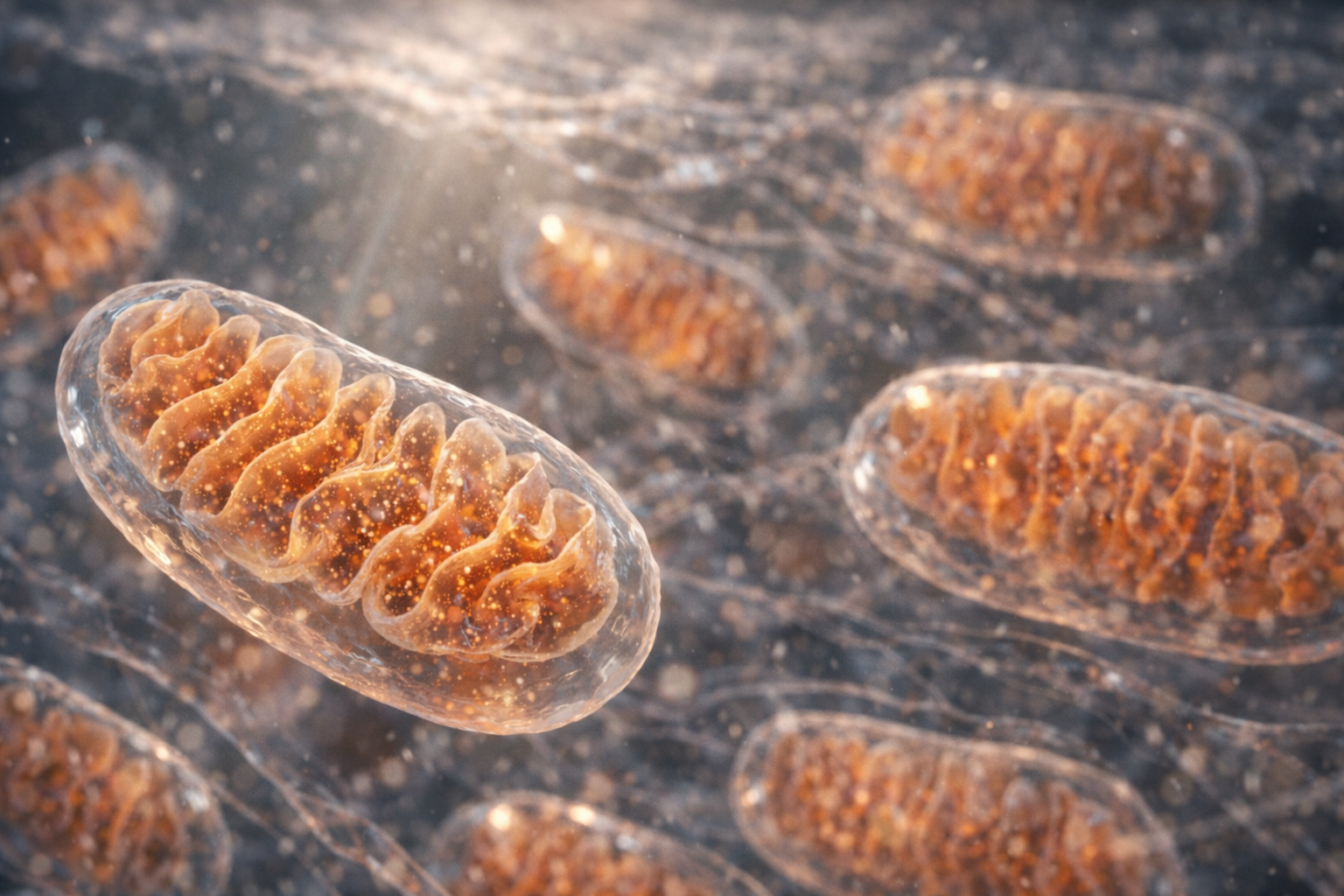
What NAD+ is and what it does
Nicotinamide Adenine Dinucleotide (NAD+) is a coenzyme found in every cell of the body. It functions as an essential electron carrier in cellular respiration, the process by which cells convert nutrients into usable energy (ATP). Without adequate NAD+, this process becomes inefficient and cellular energy production declines.
Beyond energy metabolism, NAD+ is a required substrate for two critical classes of enzymes: sirtuins (which regulate gene expression, inflammation, and cellular metabolism) and PARP enzymes (which detect and repair DNA strand breaks). When NAD+ is depleted, both of these repair and regulatory systems are compromised.
Age-related decline and why it matters
NAD+ levels in human tissue decline by approximately 50% between the ages of 40 and 60. This reflects an increasing demand for NAD+ as cellular damage accumulates (activating repair enzymes that consume it), combined with a decline in the biosynthetic pathways that produce it.
The consequences include reduced mitochondrial efficiency, slower DNA repair (increasing mutation accumulation), heightened inflammatory signalling, and metabolic dysregulation. These are interconnected aspects of the same underlying decline in cellular function.
Sirtuins, PARP enzymes, and cellular longevity
Sirtuins (SIRT1, SIRT7) are sometimes called “longevity proteins.” They regulate chromatin structure, mitochondrial biogenesis, inflammatory response, and stress resistance, all in an NAD+-dependent manner. When NAD+ levels are adequate, sirtuins function efficiently. When depleted, sirtuin activity declines accordingly.
PARP1 and PARP2 detect and initiate repair of DNA strand breaks, which occur continuously in all cells. PARP activity is highly NAD+-dependent and is one of the major consumers of cellular NAD+. In states of high oxidative stress, which increase with age, PARP activity surges, further depleting NAD+ and creating a cycle that accelerates cellular decline.
The competition for NAD+
In older cells, the increasing burden of DNA damage activates PARP enzymes which consume large amounts of NAD+, leaving less available for sirtuins and energy metabolism. Restoring NAD+ levels helps break this cycle, supporting both repair (via PARP) and regulatory function (via sirtuins) simultaneously.
IV infusion versus oral NAD+ precursors
Oral NAD+ precursors, NMN (nicotinamide mononucleotide) and NR (nicotinamide riboside), are enzymatically converted to NAD+ in the body and can modestly support NAD+ levels. However, their bioavailability is significantly limited by the digestive process. Only a fraction of what is ingested reaches the cells as active NAD+.
Intravenous NAD+ bypasses the digestive system entirely, delivering the molecule directly into the bloodstream at concentrations that oral supplementation cannot achieve. The immediacy of cellular uptake and the absolute concentration of the dose are fundamentally different from what oral precursors produce. Oral precursors have a role as maintenance support between IV sessions, they are not equivalent, but they are complementary.
The evidence base
NAD+ has been extensively studied in preclinical and early clinical research. The molecular biology is well-established, the role of NAD+ in cellular energy, sirtuin activation, and DNA repair is not contested. Evidence from animal models for longevity-related effects is robust. Human clinical trial data, while growing, is still accumulating for specific medical indications.
IV NAD+ is not currently FDA-approved for specific medical conditions. Patient-reported outcomes are consistently positive, increased energy, improved mental clarity, better sleep quality, and skin improvements are commonly reported. Long-term large-scale randomised controlled trials are ongoing. Not recommended during pregnancy or breastfeeding.
Ready to put this into practice?
Consultations at HALO are free and never obligatory. Bring your questions.
Book Now