
Skin Science · Fundamentals
The mechanisms of skin aging - what happens and why
Skin aging is not a single process. It is the cumulative result of several parallel mechanisms: intrinsic, extrinsic, and behavioural operating simultaneously. Understanding them is the basis for evidence-based decisions.
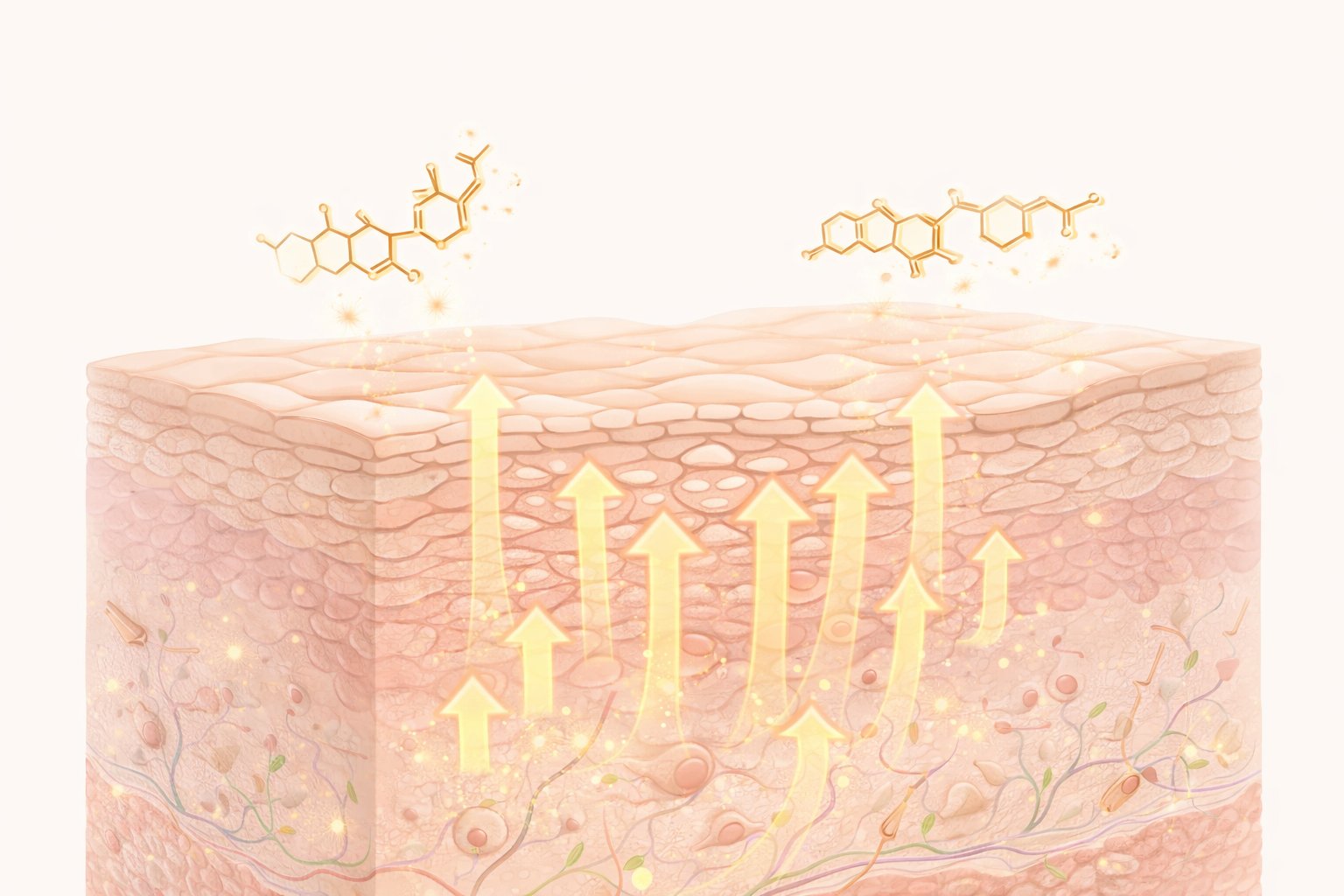
Intrinsic aging: the biological clock
Intrinsic aging is genetically programmed and occurs independently of environment. From approximately the mid-twenties, collagen production decreases by roughly 1% per year, and in women the decline accelerates after menopause. Elastin fibers become less resilient. Epidermal cell turnover slows, from approximately 28 days in young skin to 40 to 60 days in older skin, meaning damaged cells are replaced more slowly and the skin surface is less consistently renewed.
The dermis gradually thins. Subcutaneous fat redistributes. Bone resorption in the facial skeleton alters the structural support beneath the skin. These changes are intrinsic, predictable and cumulative. And they form the baseline over which all extrinsic factors operate.
Extrinsic aging: the environmental drivers
Extrinsic aging is driven by environmental and lifestyle factors. UV radiation is the dominant contributor, accounting for an estimated 80 to 90% of visible facial aging (Flament et al., Dermatoendocrinology, 2013). Other significant contributors include chronic low-grade inflammation (inflammaging), oxidative stress, glycation, smoking, and the mechanical stress of repeated facial muscle contractions.
The practical implication: Because extrinsic factors dominate visible aging, most of what we observe is substantially modifiable. Daily SPF, anti-inflammatory lifestyle factors, and targeted clinical treatments address the pathways responsible for the majority of visible change.
Collagen and elastin show a structural decline
The dermis is composed primarily of collagen (approximately 70 to 80% of dry weight) and elastin. Collagen provides tensile strength and resistance to structural deformation. Elastin provides recoil, which is the ability of skin to spring back after movement. Both decline with age and UV exposure.
Collagen degradation is driven by matrix metalloproteinases (MMPs), enzymes whose activity is significantly upregulated by UV exposure and inflammatory signaling. As the collagen matrix degrades and new collagen synthesis declines simultaneously, the dermis thins and loses structural integrity. Most clinical treatments for skin aging address this pathway directly: Botox reduces mechanical stress, polynucleotides and PRP stimulate fibroblast activity, microneedling triggers collagen induction, and IV infusions provide the building blocks collagen production requires.
Glycation: sugar-related collagen damage
Glycation is the non-enzymatic reaction between glucose and proteins including collagen and elastin. The resulting advanced glycation end-products (AGEs) cross-link protein fibers, stiffening them and making them less functional. Glycated collagen is stiffer, more brittle, and less able to provide the flexible structural support that keeps skin looking firm.
Glycation accumulates over time and is accelerated by chronically elevated blood sugar. It is a significant but underappreciated driver of skin aging and one of the mechanisms targeted by L-Carnosine in the Skin Rejuvenation Infusion formulation.
Oxidative stress and reactive oxygen species
Oxidative stress occurs when reactive oxygen species (ROS) exceed the skin’s antioxidant capacity. ROS are unstable molecules generated by cellular metabolism, UV exposure, and environmental pollutants. ROS damage cellular structures including DNA, lipids in cell membranes, and structural proteins including collagen fibers.
The skin’s antioxidant defense system (including glutathione, Vitamin C, Vitamin E, and enzymatic antioxidants) neutralizes ROS under normal conditions. With age, UV exposure, and lifestyle factors, this system becomes less efficient. Supporting antioxidant capacity through topical SPF, dietary polyphenols, and targeted supplementation directly addresses this mechanism.
References
- Varani J, Dame MK, Rittie L, et al. Decreased collagen production in chronologically aged skin: roles of age-dependent alteration in fibroblast function and defective mechanical stimulation. Am J Pathol. 2006;168(6):1861-1868. PMID 16723701.
- Grove GL, Kligman AM. Age-associated changes in human epidermal cell renewal. J Gerontol. 1983;38(2):137-142. PMID 6827031.
- Wong CH, Mendelson B. Newer Understanding of Specific Anatomic Targets in the Aging Face as Applied to Injectables: Aging Changes in the Craniofacial Skeleton and Facial Ligaments. Plast Reconstr Surg. 2015;136(5 Suppl):44S-48S. PMID 26441110.
- Flament F, Bazin R, Laquieze S, et al. Effect of the sun on visible clinical signs of aging in Caucasian skin. Clin Cosmet Investig Dermatol. 2013;6:221-232. PMID 24101874.
- Pilkington SM, Bulfone-Paus S, Griffiths CEM, et al. Inflammaging and the Skin. J Invest Dermatol. 2021;141(4S):1087-1095. PMID 33358020.
- Kadunce DP, Burr R, Gress R, et al. Cigarette smoking: risk factor for premature facial wrinkling. Ann Intern Med. 1991;114(10):840-844. PMID 2014944.
- Quan T, Qin Z, Xia W, et al. Matrix-degrading metalloproteinases in photoaging. J Investig Dermatol Symp Proc. 2009;14(1):20-24. PMID 19675548.
- Gkogkolou P, Böhm M. Advanced glycation end products: Key players in skin aging? Dermatoendocrinol. 2012;4(3):259-270. PMID 23467327.
- Papaccio F, D Arino A, Caputo S, et al. Focus on the Contribution of Oxidative Stress in Skin Aging. Antioxidants (Basel). 2022;11(6). PMID 35740018.
Ready to put this into practice?
Consultations at HALO are free and never obligatory. Bring your questions.
Book Now